
HTTP: 401 and 403

This guest post first appeared in LinkedIn
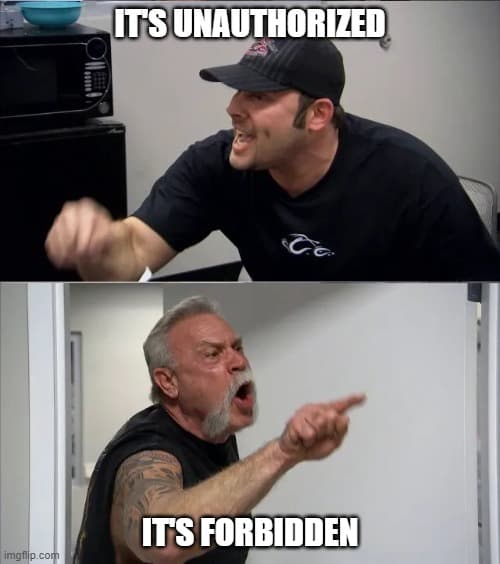
Meme by a me, myself and I
HTTP has a lot of codes to identify the status on the responses. We have 200 when everything is OK. The 404 code when something is nowhere to be found. Error 500 when that something went Kaboom!
But there is a pair that takes its pride in confusing developers on when to use them. I'm talking about 401 and 403. Unauthorized and Forbidden, respectively. Now wait a second, doesn't those words mean the same? Well, yes... and no.
To unauthorize or to forbid
To understand the difference between the significance of those status let us picture a real life scenario.
Imagine you are trying to enter home, but you don't have the right key. That's a 401(Unauthorized). Now imagine you find the right key, managed to enter home and are trying to enter your teenage sister's room. That's a 403(Forbidden).
So the intention with status code 401(Unauthorized) is to represent a case where you can't have access to a resource because your authentication credentials are invalid. Expired credentials should also trigger this kind of error. With oauth and the credential's scopes, things can get a little tricky, but that will depend on how and where those scopes are checked. To summarize, any authorization error at authentication level, should return a 401(Unauthorized).
In the case of 403(Forbidden) the idea is to represent an authorization error after the authentication. Your credentials are valid. You can access resources. But you don't have permission to access that specific resource.
So they both mean the same
Technically, yes. They both mean the same. You simply don't have access. But they tell you when that error was triggered. An invalid credentials error is not the same as a permission constraint. Both issues are addressed in entirely different ways. Hence the need for two status codes that mean the same, yes, but are not the same, also yes.